
Advertising Reimagined: The Endless Potential of Projection Mapping
What Is Projection Mapping in Advertising?
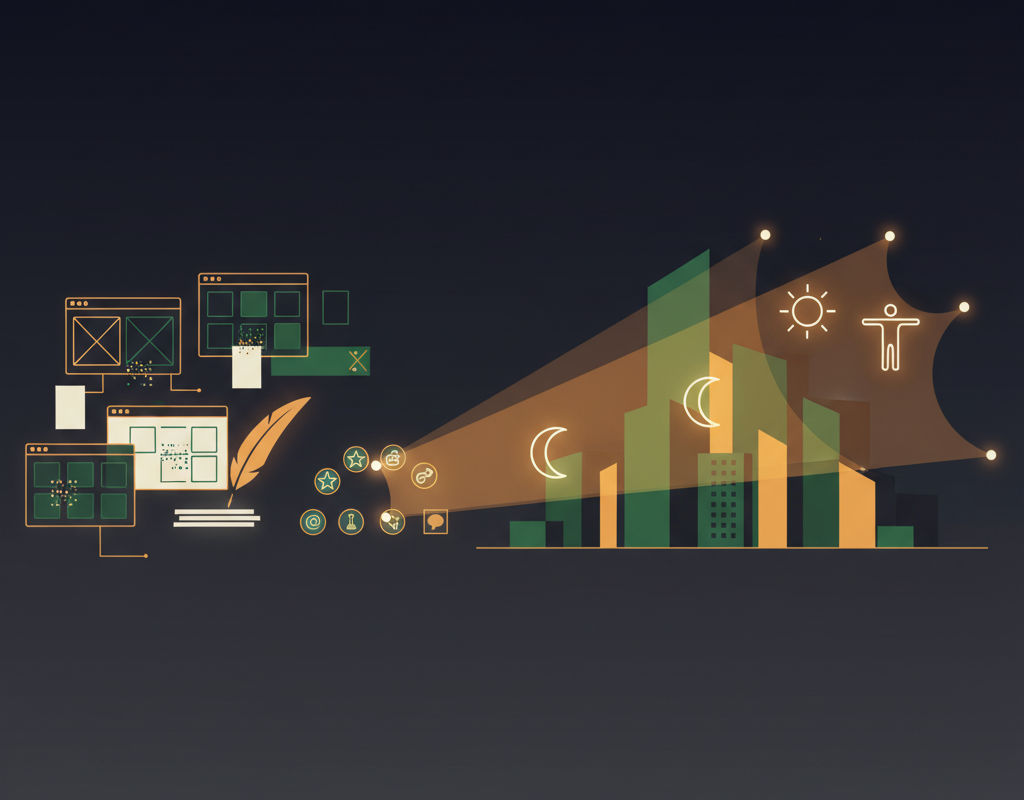
Projection mapping in advertising is the technique of projecting 3D moving images onto buildings, objects, or public spaces to create immersive brand experiences. Originally a form of guerrilla marketing, projection mapping advertising has been embraced by mainstream brands over the past decade to transform physical environments into spectacular visual campaigns.
The transformation of any building or arena into scenes from any era, locality, or situation offers boundless possibilities for advertisers. From buildings seemingly being destroyed before your eyes, as seen in Samsung’s staggering use of the technology on a building in Amsterdam, to a basketball court transformed into a giant ball pool, projection mapping advertising creates breathtaking performances on an epic scale. Projection mapping is not simply a video played on a wall — it is a precisely calibrated illusion that conforms to the geometry of any surface, making buildings, cars, and venues appear to reshape in real time.
Best Projection Mapping Advertising Campaigns: Landmark Examples
Projection mapping advertising campaigns have produced some of the most memorable brand activations in modern marketing. According to Adidas’s 2011 campaign in Marseille, large-scale building projections can deliver theatrical variety — from shadows appearing in palace windows to the creation of a sumo wrestling arena and the transformation of the building into a retro ghetto blaster.
Iconic architectural landmarks have also served as canvases, with Chinese authorities authorising Porsche to transform Beijing’s Imperial Palace into a motorway for the 911 50th anniversary celebrations in 2013. This provides the opportunity for iconic buildings to be reimagined by the public, as best exemplified in this Sydney Opera House performance in 2015.
| Brand | Year | Location | Type |
|---|---|---|---|
| Ralph Lauren | 2010 | Bond Street, London | Flagship store projection |
| Adidas | 2011 | Marseille, France | Building-scale theatrical display |
| BMW Series 3 | 2012 | Brisbane, Australia | Product launch event |
| Porsche 911 | 2013 | Beijing Imperial Palace | Heritage landmark activation |
| Sydney Opera House | 2015 | Sydney, Australia | Public arts and branding |
How Projection Mapping Advertising Works for Product Launches
Projection mapping advertising for product launches works by projecting dynamic visuals directly onto the product or event space, creating a live sense of movement and transformation for attendees. Several advertisers have used this approach when launching new products, and the technology lends itself particularly well to the automotive industry.
As seen in this 2012 BMW Series 3 launch in Brisbane, projection mapping can manipulate, distort, and even change the colour of a physical product in real time — including drawing an ultraviolet outline around the car. According to the EventMarketer industry publication, projection mapping product reveals generate significantly higher audience engagement than traditional unveiling methods.
Steps to Execute a Projection Mapping Product Launch
- Select the physical surface or product to serve as the projection canvas.
- Create a precise 3D digital model of the surface geometry.
- Design animated visuals that align with the product’s brand story.
- Calibrate projectors to map content accurately onto the physical form.
- Rehearse the sequence with lighting and audio synchronisation.
- Execute the live event and capture footage for digital distribution.
Projection Mapping Advertising for Brand Storytelling and Retail
Projection mapping advertising enables brands to bring their visual identity to life on their own physical locations, merging digital media with architecture. Ralph Lauren, for example, in 2010 used projection mapping to launch a team of polo players across their flagship Bond Street shop, combining this powerful imagery with clear representations of their product as huge projections of models paraded on a virtual catwalk.
Projection mapping is not limited to large-scale outdoor spectacles — it is equally effective in retail environments, event spaces, and trade show booths. Key advantages for brand storytelling include:
- Zero physical impact on buildings or objects — surfaces remain unaltered
- Ability to rapidly change creative content for different audiences or campaigns
- High shareability on social media, extending reach beyond the live audience
- Versatility across venues, from flagship stores to heritage landmarks
The Future of Interactive Projection Mapping Advertising
Interactive projection mapping advertising represents the next evolution of this technology, allowing consumers to directly engage with projected visuals rather than passively watching. Several car companies are already utilising interactive projection mapping tools to promote their products, enabling users to change colours, explore features, or trigger animations through gesture and touch.
According to Grand View Research, the global projection mapping market is projected to grow substantially through the late 2020s, driven by demand from advertising, entertainment, and retail sectors. As the technology develops and the realism of virtual images improves, the potential for every industry to leverage projection mapping advertising continues to expand — from real estate walkthroughs projected onto building facades to interactive retail displays that respond to foot traffic.
Frequently Asked Questions
What Is Projection Mapping Advertising Used For?
Projection mapping advertising is used to create immersive brand experiences by projecting 3D visuals onto buildings, products, and event spaces. Common applications include product launches, flagship store activations, public arts installations, and large-scale awareness campaigns. The technique allows brands to transform any physical surface into a dynamic digital canvas without altering the structure itself.
How Much Does Projection Mapping Advertising Cost?
Projection mapping advertising costs vary widely depending on scale, surface complexity, and content production. Small indoor activations may start from a few thousand pounds, while large building-scale campaigns — such as the Adidas Marseille or Porsche Beijing projects — can require six-figure budgets covering equipment hire, 3D modelling, animation, and on-site technical crews.
What Are the Benefits of Projection Mapping Over Traditional Advertising?
Projection mapping offers several advantages over traditional advertising formats. It delivers high visual impact without permanent physical alterations, creates shareable social media content, and can be updated or changed instantly. Unlike static billboards or wraps, projection mapping can tell a sequential story, respond to audience interaction, and transform familiar landmarks into memorable branded experiences.
Can Projection Mapping Be Used on Any Surface?
Projection mapping can be applied to virtually any surface, including buildings, vehicles, stage sets, and interior walls. The key requirement is accurate 3D modelling of the surface geometry so that projected content aligns precisely with physical contours. Lighter-coloured and non-reflective surfaces produce the best results, though advances in projector brightness have expanded viable surface options significantly.
Ready to grow your brand?
Take the first step towards improving your digital presence.
Build Your Campaign TodayLatest Influencer Marketing Articles

The Seven Step Pathway to Video Virality
Relatability and Relevancy Popular events such as big football matches or live festivals constantly generate copious amounts of trending topics …

You What? YouTube Optimisation Explained
Keywords First things first – find all the brands you classify as competitors. While you probably have an idea of …

The Rise and Rise of Amazon Advertising
Essentially, Amazon works similarly to Google AdWords and has become a search engine that has been capitalising on the advertising …