
Healthcare & Wellness Marketing Agency
Illustrative chart. Figure from the Pure Smiles case study.
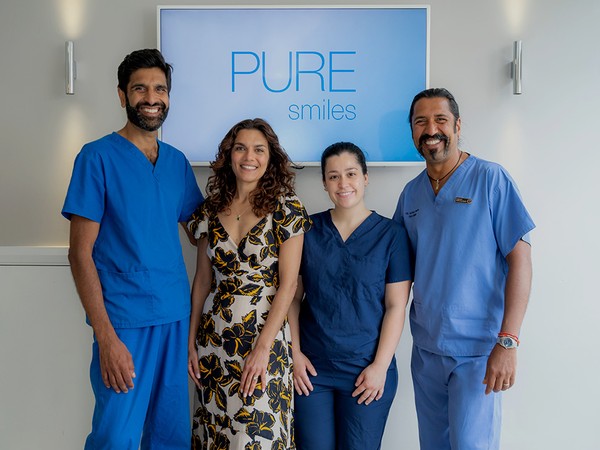
Nobody chooses a dentist, a clinic or a prescription supplement the way they choose a jumper. They search, they read, they compare, and they check whether the practice looks like it knows what it is doing. Pure Smiles came to us with good clinical work and a website that did not say so; a rebuilt content programme and tidied site copy produced a 47% increase in appointments. That is the whole job in one line. Make the search result match the standard of the treatment.
What we deliver
Healthcare marketing is ordinary marketing with two extra constraints: the claims have to survive a regulator, and the content has to survive Google's YMYL scrutiny. We build for both from the start rather than stripping claims out at the end.
Make the search result match the standard of the treatment.
What's included
Treatment-page architecture
One page per treatment, written for the query a patient actually types, not one catch-all "services" page.
Local pages that rank
Practice, borough and "near me" coverage, built on local SEO foundations: Business Profile, citations, and a page per location worth having.
MHRA and ASA-safe copy
Claims written to the CAP Code and MHRA advertising guidance, and to AHPRA and the Therapeutic Goods Advertising Code for Australian clients. Before-and-after imagery and testimonials handled to the rules of the jurisdiction, not to a house style.
Medical-reviewer E-E-A-T
Named clinical reviewers, author profiles, cited evidence and honest disclaimers, the signals Google asks for on health content and the ones a patient reads anyway.
GEO for symptom and treatment answers
Structuring content so AI assistants can quote the practice accurately when someone asks about a symptom or a treatment, instead of quoting a forum.
Creator campaigns with claims vetting
Age-gating, briefing and pre-publication approval on every piece, because a creator's off-script sentence is the brand's regulatory problem.
Clinics & practices
Aesthetics, private GP and specialist clinics sell an experience as much as a procedure, which is why creator work carries weight here that it does not carry in, say, insurance. For Sisu Clinic, an aesthetics provider opening in Belfast and London, we vetted more than 700 creators against the clinic's demographic and ethos and invited a shortlist for treatment. The campaign produced 27 Instagram reels and over 100,000 views.
For multi-site clinics the search side matters more than the social side: a page per clinic, opening hours and practitioners that are actually correct, and consistent details across every directory a patient might land on.
Health charities
Women Talking Fibroids, a global non-profit helping women recognise fibroid symptoms and advocate for themselves, ran a paid creator campaign for its July awareness push. We sourced creators with genuine standing in women's health communities and briefed them with accurate clinical information to adapt in their own words. The campaign produced 54 collaborations and over 100 pieces of content, from a combined following of 3,780,903.
We work with health charities on the same terms as commercial clients. The only difference is that the success measure is informed people, not booked appointments, so the reporting is built to show that instead.
Proof
A 37%+ increase in organic traffic, a 47% increase in appointments and a 66% increase in non-brand organic, from a rebuilt content programme and a digital branding overhaul.
Read the Pure Smiles case study#1 for "Dentist in Islington", 1,079 keyword rankings within ten months, and 166 of those in the top 20, built on a site overhaul and a consistent content strategy.
Read the London City Smiles case studyA three-month wave-based micro-influencer campaign across Instagram, blogs and YouTube delivered a 51% increase in organic revenue and a 46% increase in organic traffic.
Read the Complete Me case studyCase Studies
Our work in the Healthcare sector

Get your free healthcare SEO audit
We will look at your treatment pages, your local visibility, your compliance exposure and how AI assistants currently describe you, then send back what we would fix first. No obligation, and we will tell you if the honest answer is that you do not need us.
Get my free auditFree instant SEO audit of your website
Checking your site. This usually takes under a minute.
We could not run the audit just now. You can still run it on the audit page.
Go to the audit pageCompliance
The practical work is GDC-compliant claims throughout for dental practices. Prescription and pharmacy products are written to MHRA rules, nothing implies a diagnosis, and creator briefs carry the same restrictions the on-site copy does.
What healthcare marketing costs
- No minimum term
- 60 days' notice
- GEO included in every SEO plan
Influencer campaigns start at £1,100 a month plus creator costs, which run from £50 to £250 per post for micro-influencers and £250 to £1,000 for macro creators. Multi-site practices and regulated product launches cost more, because the compliance review is real work; we quote those to brief and tell you the number before you commit.
See SEO pricingFrequently Asked Questions
Healthcare content is classified as YMYL by Google, meaning it is held to the highest quality and accuracy standards. We work with medically qualified reviewers, implement author E-E-A-T signals (experience, expertise, authoritativeness, trustworthiness), add proper medical disclaimers, and ensure all claims are evidence-based and properly cited. This rigorous approach builds trust with both search engines and patients.
Yes. In the UK, we ensure compliance with the ASA, CAP Code, and MHRA advertising guidelines. For Australian healthcare clients, we adhere to AHPRA advertising regulations and the Therapeutic Goods Advertising Code. Our team understands the specific restrictions around testimonials, before-and-after imagery, and clinical claims in both jurisdictions, so your marketing is effective without crossing regulatory lines.
We focus on high-intent local search terms (“private GP near me,” “dermatologist [city],” “physiotherapy clinic [suburb]”) combined with Google Business Profile optimisation, review generation campaigns, and conversion-optimised landing pages. For specialist practices, we also target condition-specific queries that patients research before seeking treatment, capturing them at the top of the funnel.
For healthcare groups with multiple clinics, we build individual location pages with unique content, staff profiles, and localised schema markup (MedicalClinic, Physician). Each location gets its own Google Business Profile strategy, citation building, and review management. We also create a hub-and-spoke content architecture that builds the parent brand authority while driving traffic to individual locations.
Our content framework separates informational content (conditions, symptoms, treatments) from commercial content (service pages, booking CTAs). Informational content follows medical writing best practices, citing peer-reviewed sources, using qualified language, and avoiding absolute claims. This approach satisfies both Google’s quality raters and healthcare advertising regulators, building rankings through authority rather than sensationalism.
Yes. Dental is the part of healthcare we have the most published proof in. Pure Smiles recorded a 47% increase in appointments after a rebuilt content programme, and London City Smiles reached #1 for “dentist in Islington” with 1,079 keyword rankings inside ten months. The work is a treatment page per procedure you actually want to sell, a location page per site, GDC and ASA-compliant claims throughout, and review generation that stays inside the advertising rules. Single-site practices and groups are both in scope; groups cost more because each site needs its own page, Business Profile and citation set.
Yes, within the rules. In the UK, prescription-only medicines cannot be advertised to the public, so the marketing has to work through condition and symptom education, service pages for the consultation rather than the drug, and clinician-reviewed content that helps someone decide whether to seek advice. Claims are written to MHRA guidance and the CAP Code, and creator briefs carry the same restrictions the on-site copy does, with pre-publication approval on every piece, because an off-script sentence from a creator is still your regulatory problem. For Australian clients the same work is done to AHPRA rules and the Therapeutic Goods Advertising Code. If a brief needs a claim we cannot make, we tell you before the contract, not after.
Ready to build healthcare marketing that survives scrutiny?
Tell us about your practice, clinic or brand and we will tell you what we would fix first.
Schedule a Free Call