
Traditional SEO vs GEO: Understanding the Difference
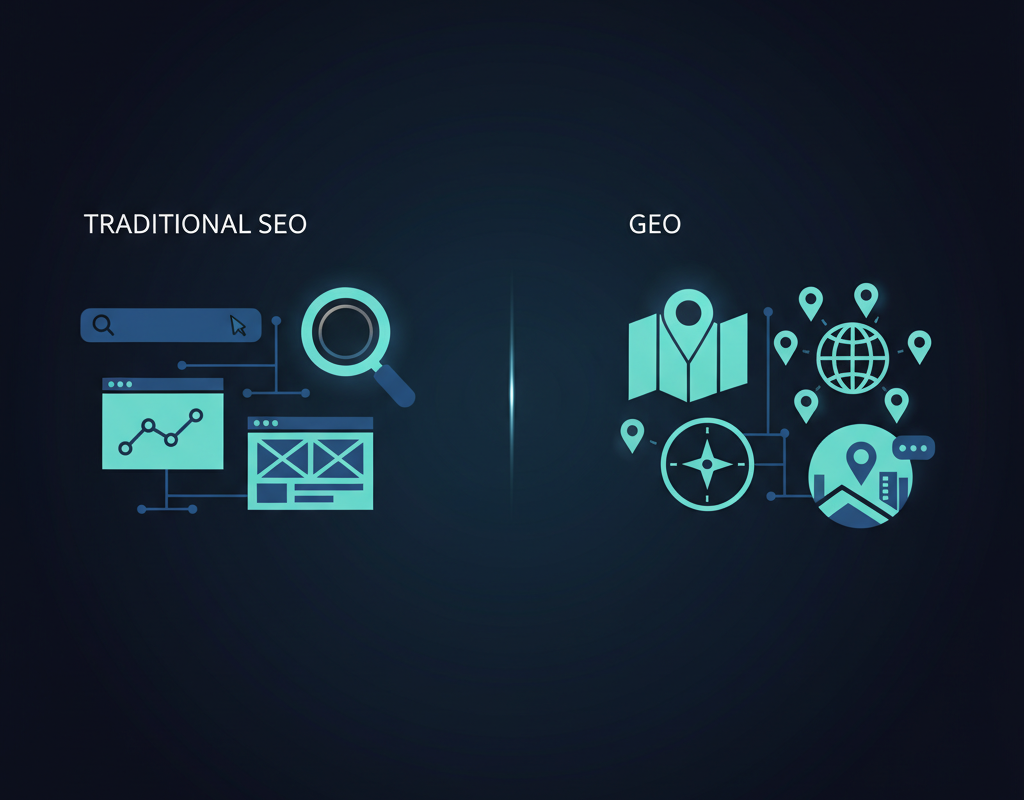
Traditional SEO vs GEO is the defining question for digital marketing in the AI era: two disciplines with different targets, tactics, and success metrics. Traditional SEO optimises websites to rank in search engine results pages. GEO, Generative Engine Optimisation, prepares content to be cited directly inside AI-generated answers from engines like ChatGPT, Gemini, and Perplexity.
What Is the Difference Between Traditional SEO and GEO?
Traditional SEO vs GEO represents two distinct approaches to organic visibility. Traditional SEO is the practice of optimising a website so it ranks in Google’s search engine results pages (SERPs) through keyword research, on-page optimisation, technical fixes, and backlink building. GEO is the practice of structuring content so that AI-driven search engines quote, summarise, or cite it in their generated responses, bypassing the SERP entirely.
Traditional SEO is not dead. GEO is a separate discipline from SEO. They are parallel disciplines that serve different discovery surfaces, and both are required for full organic reach in 2026.
| Factor | Traditional SEO | GEO |
|---|---|---|
| Primary target | Google’s ranking algorithm | AI answer engines (ChatGPT, Gemini, Perplexity) |
| Success metric | SERP ranking position | Citation or inclusion in AI responses |
| Key inputs | Keywords and backlinks | Context, citations, and content clarity |
| Technical priority | Site health and crawlability | Structured data and semantic markup |
| Content goal | Rank for search queries | Be quoted or summarised by AI |
Why Do Traditional SEO and GEO Numbers Matter Now?
Traditional SEO vs GEO is no longer a theoretical debate. The usage data makes the stakes concrete:
- Assistants such as ChatGPT now handle an enormous daily volume of prompts
- A substantial and growing share of consumers use AI assistants regularly to find information
- A large share of Google searches end without a click to any website
- Much of what assistants quote comes from third-party sources rather than a brand’s own site
Zero-click search means a page can rank in position one and still receive no traffic. GEO addresses that gap by optimising for the answer itself, not the link to the answer.
What Do Traditional SEO and GEO Have in Common?
Despite their different targets, traditional SEO and GEO share a common foundation. Both disciplines depend on:
- Quality, trustworthy content
- Demonstrated authority and expertise
- Strong user experience
- Continuous adaptation to how people search
GEO is a structured way of presenting good content so AI engines can use it. It depends on that content already being good. A site without credible expertise will not be cited by AI any more than it would rank well in Google.
How Should Your Business Approach Traditional SEO vs GEO?
Traditional SEO vs GEO is not an either/or decision. An integrated strategy covers both discovery surfaces:
- Maintain traditional SEO fundamentals (keyword research, technical health, and backlink authority) to protect SERP rankings.
- Layer GEO practices on top (structured data, clear factual statements, cited sources, and well-defined H2 sections) so AI engines can extract and quote your content.
- Measure separately: track SERP rankings for SEO and monitor AI citation frequency for GEO.
- Audit existing content to identify pages that answer specific questions clearly enough to be cited by AI answer engines.
- Update content regularly, as AI models weight recency when selecting sources to quote.
According to industry analysis, 70 to 85% of passages quoted by large language models originate from off-site sources, which means content structure and factual clarity, the core of GEO, directly determines whether your business is included in AI-generated answers.
FAQ: Traditional SEO vs GEO
Is traditional SEO still worth investing in?
Yes. Traditional SEO ensures your site ranks in Google’s results pages, which still drive significant traffic, particularly for transactional and local queries. GEO does not replace that. Both are needed for full organic coverage.
What does GEO stand for?
GEO stands for Generative Engine Optimisation. It is the practice of structuring content so that AI-powered answer engines (such as ChatGPT, Gemini, and Perplexity) cite, quote, or summarise it in their responses.
Can a business do traditional SEO and GEO at the same time?
Yes, and it should. The two disciplines share foundational requirements (quality content, expertise, and clear structure) so investment in one supports the other. An integrated approach maximises organic reach across both traditional search and AI search surfaces.
Why do so many Google searches end in zero clicks?
According to industry data, 57 to 60% of Google searches now end without a click because Google’s own features (featured snippets, AI Overviews, and knowledge panels) answer the query directly on the results page. GEO applies the same principle to AI engines: if your content is cited in the answer, you gain visibility even without a click-through.
What is the biggest technical difference between traditional SEO and GEO?
Traditional SEO prioritises technical site health: crawlability, page speed, and link authority. GEO prioritises structured data, semantic HTML, clear factual statements, and cited sources, because AI engines parse meaning and extract quotable passages rather than following links.
See how often AI tools like ChatGPT mention your brand with our free GEO visibility checker, with our free AI visibility checker.
Ready to grow your brand?
Take the first step towards improving your digital presence.
Get a Free GEO AuditLatest GEO Articles

GEO Audit Guide: How to Check Your Brand’s AI Visibility
What Is a GEO Audit and Why Does Your Brand Need One? A GEO audit is a structured process for measuring and improving how your brand appears in AI-generated search…

Schema Markup and AI Search: Why Structured Data Matters More Than Ever
What Is Schema Markup and Why Does It Matter for AI Search? Schema markup is a standardised vocabulary of structured data that tells AI search engines exactly what your brand…

ChatGPT vs Google: What It Means for Your Brand’s Visibility
What Is the Difference Between ChatGPT and Google for Brand Visibility? ChatGPT and Google represent two distinct search ecosystems, each requiring a different strategy to achieve brand visibility.
Terrier runs SEO and GEO for 320+ brands, from £1,250 a month.
Schedule a call