
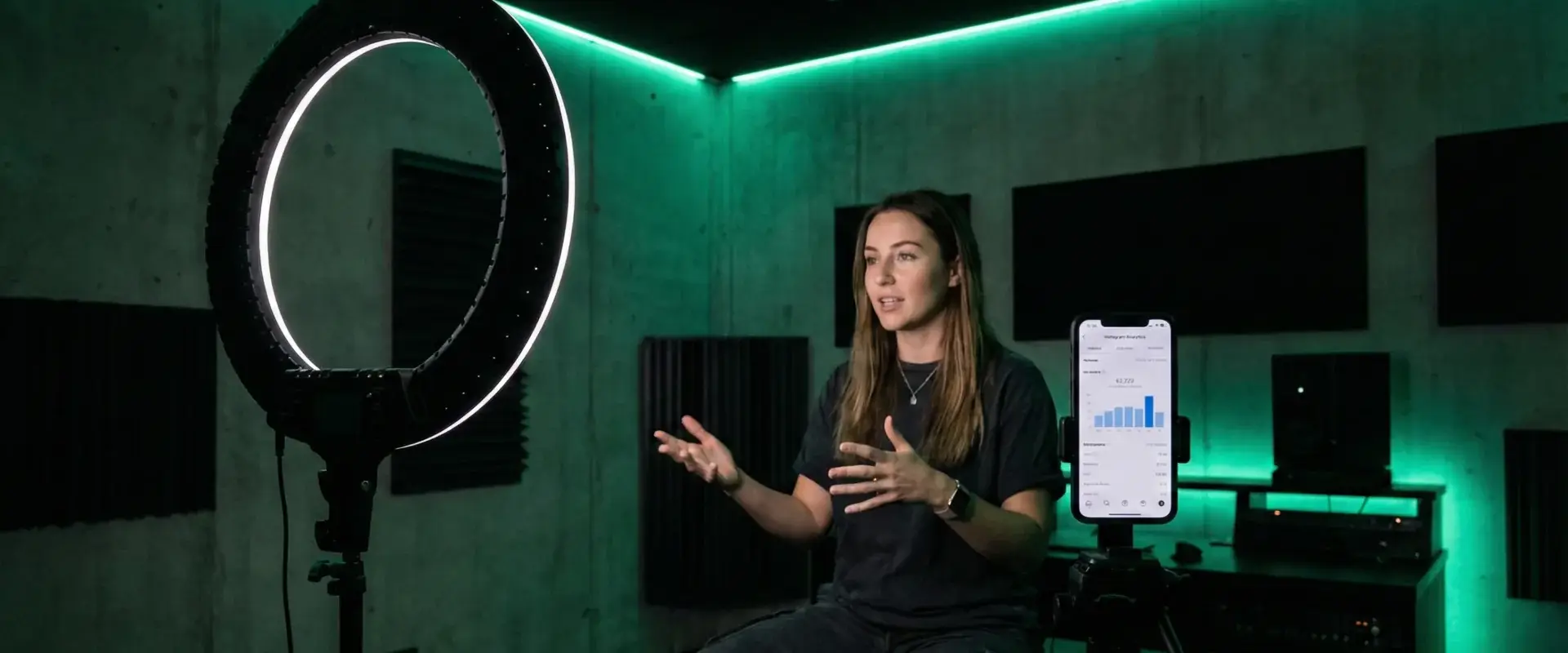
We work with big brands, and those that aspire to be big








Creator campaigns, run end to end
We plan, cast, brief, run and report influencer campaigns for brands in the UK, Ireland and Australia. That covers gifting programmes, paid partnerships, always-on ambassador rosters and user-generated content licensed for paid media. We handle contracting, briefing, content approvals and payment, so the campaign is one line on your side rather than forty conversations.
Creator work is bought for one of two reasons: reach you cannot buy in an auction, or content you cannot shoot in a studio. We scope from which of the two you actually need, because the casting, the brief and the reporting differ.
How a campaign runs
A single campaign runs six to eight weeks from kick-off to report. The shape below is the default; always-on rosters repeat weeks three to six on a monthly cycle.
Week 1: brief and shortlist
We agree the objective, the platforms, the creator tier and the deliverables, then build a shortlist against audience overlap, engagement quality and past brand work. Every profile is checked by hand for bought followers and for conflicts with your competitors.
Week 2: casting and contracting
You approve the shortlist. We negotiate fees, usage terms and exclusivity, and issue contracts. Usage is agreed here rather than after the fact, because retro-licensing content for paid media is where budgets quietly go.
Weeks 3 and 4: briefing and production
Creators receive a brief with the message, the mandatories and the disclosure requirement, and are left to write in their own voice. Product ships. We review drafts against the brief and the advertising codes before anything is scheduled.
Weeks 5 and 6: live and amplify
Content goes live to the agreed schedule. We monitor comments and saves in the first 48 hours, because that is where a piece either travels or does not, and we flag the pieces worth putting paid budget behind while they are still fresh.
Weeks 7 and 8: report and licence
You get a report broken down by creator, platform and content type, the assets you have licensed, and a read on which casting decisions to repeat. Under-performing creators are cut from the next round; the ones who worked are the start of an ambassador roster.
What campaigns cost
Influencer retainers start from £1,100 per month, which covers strategy, casting, briefing, approvals, creator management and reporting. Creator fees and product sit on top of that and are paid at cost. We do not mark them up.
Creator fees vary by tier. Paid work with nano-influencers (1,000 to 10,000 followers) typically runs £50 to £250 per post, and micro-influencers (10,000 to 100,000) £250 to £1,000. Macro and celebrity rates are negotiated per campaign. Gifted campaigns replace the fee with product and shipping, which makes them the cheapest way to test whether creator content works for your category before committing budget.
What sits above the floor depends on how many creators, how many markets and whether you need paid usage rights. Tell us what you are launching and we will scope it.
Compliance
Every campaign we run is labelled as advertising. In the UK the CAP Code applies and the Advertising Standards Authority enforces it: any post made in return for payment, product or another incentive must be identifiable as an ad before the reader engages with it, which in practice means #ad in the visible caption rather than buried in a hashtag block or hidden behind “more”. Editorial control by the brand makes a post an ad even when nothing changed hands.
In Ireland the equivalent is the ASAI Code, which applies the same disclosure principle to Irish-facing content. In Australia the AiMCO Influencer Marketing Code of Practice sets the industry standard, and the ACCC enforces the Australian Consumer Law against undisclosed advertising and misleading claims. Alcohol campaigns run under the ABAC scheme in Australia and the CAP alcohol rules in the UK.
We write disclosure into the contract and check it at draft stage. A non-compliant post is the brand’s liability as well as the creator’s, so it is cheaper to catch before it is scheduled.
Who does the work
You will know the people on your account by name. Claudette Salazar, Senior Influencer Account Executive, owns casting, negotiation and the creator relationships. She is the one talking to talent and agents day to day. Marineil Barcena, Influencer Liaison Executive, runs the schedule, the approvals and the reporting, and is your point of contact through the campaign. Sarah Sinanis, Head of Influencer Marketing, sets the approach and steps in where the campaign has to earn search and AI visibility as well as reach, so the brand mentions the work generates are pointed at pages that can hold them. The wider team is on the team page.




Why Choose Terrier for Influencer Marketing
Expertise, transparency, and proven results
10+
Years of Expertise
Our team brings over a decade of digital marketing expertise across multiple industries.
720+
Campaigns Delivered
Proven track record with hundreds of successful campaigns for global brands.
5
Global Offices
Local expertise in UK, Ireland, Australia, and beyond for international reach.
Latest Influencer Marketing Insights
Stay ahead with our expert content
Influencer Rate Card UK 2026: What Creators Charge
A UK creator rate card in 2026 is built per format, not per platform, and it prices four things separately: the post, the usage…
What Is a Good Engagement Rate? 2026 Benchmarks
A good Instagram engagement rate in 2026 is around 4% or higher. The average sits at roughly 2% to 3%, so anything above that…
How Much Does Influencer Marketing Cost? UK Guide
A single paid post from a nano creator typically runs £50 to £250, a micro creator post typically runs £250 to £1,000, and mid-tier…

Gifted vs Paid: Why Gifted Performs Significantly Better
In the realm of influencer marketing, the decision between opting for gifted or paid partnerships is pivotal. While both strategies …
Specialist Influencer Marketing Services
Where a campaign needs to go deeper in one direction
TikTok Influencer Marketing
TikTok runs on a different mechanic to every other platform in an influencer brief: the algorithm decides reach per video, not follower count.
Instagram Influencer Marketing
Instagram is the platform where influencer marketing has the most formats stacked on top of one another: Reels, Stories, feed posts, carousels, and increasingly a mix…
YouTube Influencer Marketing
YouTube is the platform where influencer content works longest after it goes live.
Creator Management & Brand Ambassadors | Terrier
A one-off post gets you a moment. A managed creator relationship gets you someone who understands the product, posts about it without being briefed every time,…
UGC
Creator-shot footage you licence and run as paid, on-site and in email. Bought for the asset, not the audience.
Gifted Influencer Marketing
Product instead of a fee: the most cost-efficient influencer model, run at scale and disclosed properly.
Micro-Influencer Marketing
Cohorts of 10K to 100K creators: higher engagement, cleaner targeting, and the management overhead handled.
Influencer marketing pricing and packages
Terrier prices influencer marketing in four bands. Management fees start from £1,100 a month excluding VAT, with no minimum term, 60 days’ notice, at any...
Influencer marketing questions
Retainers start from £1,100 per month for strategy, casting, briefing, management and reporting. Creator fees and product are separate and passed through at cost. Paid posts typically run £50 to £250 for nano-influencers and £250 to £1,000 for micro-influencers, with macro and celebrity rates negotiated per campaign. Gifted campaigns cost product and shipping instead of a fee.
In a gifted campaign the creator receives the product and decides whether to post; you get authenticity and volume, but no guaranteed deliverable and no usage rights. In a paid campaign you contract specific deliverables, a posting date and a licence to reuse the content. Most brands start gifted to find the creators worth paying, then pay those.
We shortlist on audience overlap with your buyers rather than follower count, then check each profile by hand: engagement quality, comment authenticity, follower growth pattern, past brand partnerships and any conflict with your competitors. Bought followings are obvious in the growth curve. You approve every creator before we contract them.
Six to eight weeks from kick-off to final report for a single campaign, roughly two weeks casting and contracting, two weeks briefing and production, two weeks live, then reporting. Gifting programmes can move faster because there is less to negotiate. Always-on rosters run monthly once the first cycle has set the casting and the brief.
Yes, wherever payment, product or any other incentive changed hands, or where you had editorial control. In the UK that is the CAP Code, enforced by the ASA; in Ireland the ASAI Code; in Australia the AiMCO code, with the ACCC enforcing consumer law. The label has to be visible before the reader engages, not hidden in a hashtag block.
Against the objective set at kick-off. Reach campaigns are read on impressions, reach and saves by creator and platform; conversion campaigns on tracked links, codes and post-campaign activity. We report by creator so you can see which casting decisions to repeat, and we say plainly when a creator did not earn their fee.
Build your campaign
Sketch the shape of a campaign (platforms, creator tier, deliverables) and send it to us as a brief.